
 Free quiz to know your sales aptitude
 Sales Pipeline Calculator
The best CRM for a small business is not necessarily the platform with the most features. Instead, it is the solution that aligns with your sales process, supports your team’s workflow, and can grow alongside your business without adding unnecessary complexity.
In this guide, we compare some of the most popular CRM platforms available today, explain the features that matter most to small businesses, and provide practical guidance to help you choose the right solution for your organization.
How to Choose a CRM
Choosing the right CRM is not about selecting the platform with the most features. Small businesses should focus on ease of use, adoption, scalability, and the ability to support their sales process.
When evaluating CRM software, consider:
- Contact and company management
- Sales pipeline visibility
- Email integration
- Workflow automation
- Reporting and forecasting
- Mobile access
- Team collaboration
- Cost and scalability
The best CRM is the one your team will actually use every day.
Benefits of CRM customization
Customizing your CRM is not just about flexibility. It directly impacts how your team works and how efficiently you can scale your sales operations.
Here are some of the key benefits of using a customizable CRM:
Align your CRM with your process
Every sales team works differently. A customizable CRM allows you to build pipelines, stages, and workflows that reflect how your sales pocess. This reduces friction and helps reps move deals forward more naturally.
Improve team adoption
When a CRM matches your workflow, it becomes easier for your team to use it consistently. Simple adjustments like custom fields, tailored views, and relevant data points make the system more intuitive and reduce resistance to adoption.
Reduce manual work
Customization often goes hand in hand with CRM automation. By setting up workflows that trigger actions such as task creation, follow-ups, or deal updates, teams can spend less time on admin work and more time selling.
Get better visibility into performance
Reports allow you to track the metrics that matter most to your business. Instead of relying on generic reports, you can monitor pipeline health, conversion rates, and revenue forecasts based on your specific process.
Support business growth
As your company evolves, your CRM needs to evolve with it. A customizable platform allows you to add new pipelines, expand processes, and adjust workflows without switching tools or rebuilding your system from scratch.
Create a connected sales system
Customization makes it easier to integrate your CRM with other tools and centralize your operations. From email and calendars to quoting and invoicing, everything can be connected into a single workflow that supports your sales team end to end.
12 Best CRMs for Small Businesses
The comparison below highlights the key differences to help you quickly identify which CRM fits your needs best.
| CRM | Best for | Key strengths | Pricing from |
|---|---|---|---|
| Onpipeline | Growing sales teams | Custom pipelines, quotes, invoicing, recurring revenue, forecasting | ~$25/user/month |
| Salesforce | Enterprise teams | Deep customization, automation, AI, integrations | ~$25/user/month |
| HubSpot | All-in-one growth teams | Sales, marketing, service, automation, free CRM tools | Free, paid from ~$20/month |
| Zoho CRM | Budget-conscious teams | Custom modules, automation, AI assistant, Zoho ecosystem | Free for up to 3 users, paid from ~$14/user/month |
| Freshsales | Teams needing built-in communication | Email, phone, AI lead scoring, workflows, Kanban views | Free, paid from ~$9/user/month |
| Pipedrive | Sales teams focused on pipeline management | Visual pipelines, deal tracking, sales automation, integrations | ~$24/user/month |
| Monday CRM | Teams needing flexible workflows | Custom pipelines, dashboards, automation, visual work management | ~$10/user/month |
| Insightly | Project-based businesses | CRM plus project management, workflow automation, post-sale delivery | ~$29/user/month |
| Copper | Google Workspace users | Gmail integration, pipelines, task automation, contact enrichment | ~$23/user/month |
| Nimble | Relationship-focused teams | Contact enrichment, email tools, sales pipelines, Google/Microsoft integration | ~$24.90/user/month |
| Nutshell | Small B2B sales teams | Unlimited contacts, email sync, reporting, lead assignment, sales quotas | ~$13/user/month |
| Less Annoying CRM | Very small businesses | Simple pricing, contact management, pipelines, tasks, email logging | $15/user/month |
Pricing is based on publicly available information at the time of writing and may change. Always check each vendor’s website for current pricing, plan limits, and included features.
1. Onpipeline
Onpipeline is a cloud-based CRM built for growing sales teams that need clarity and structure without unnecessary complexity.

It focuses on helping teams manage the full sales cycle, from lead generation to closing, while keeping everything visible and easy to control.
- Custom pipelines and deal tracking
Create multiple pipelines with stages that reflect your sales process. Each deal includes detailed information such as contacts, activities, documents, and history. - End-to-end sales management
Manage leads, opportunities, cross-selling, and upselling in one place. - Activity management
Track calls, meetings, tasks, and deadlines linked to deals and contacts so nothing is missed. - Database customization
Customize fields, filters, and contact profiles to match your business model. - Quote and document management
Generate PDF quotes, use templates, manage approvals, track revisions, and collect digital signatures. - Revenue features
Manage subscriptions, recurring revenue, invoicing, and inventory directly inside the CRM. - Email and calendar integrations
Connect Gmail, Outlook, Google Calendar, and Microsoft Calendar to centralize communication and scheduling. - Automation and integrations
Use APIs, webhooks, and built-in automation tools to streamline processes and connect external systems. - AI assistant
The built-in assistant helps guide sales activity and provides updates and suggestions. - Reporting and forecasting
Monitor pipeline performance, conversion rates, and revenue projections through customizable dashboards.
One of Onpipeline’s main strengths is its balance between flexibility and usability. While many CRM platforms require extensive configuration or rely on multiple add-ons, Onpipeline combines pipeline management, lead management, quoting, invoicing, recurring revenue tracking, and forecasting within a single system. This allows growing sales teams to manage more of their sales process without adding unnecessary complexity.
Pricing
Onpipeline offers a flexible pricing model with no long-term commitments and a free trial.
- Pipeline plan
Around $25 per user per month. Includes core CRM features and pipeline management. - Standard plan
Around $39 per user per month. Adds more customization and reporting capabilities. - Advanced plan
Around $58 per user per month. Includes full functionality, automation, and advanced tools.
Additional details:
- 30-day free trial with no credit card required
- Pricing scales with active users
- Plans can be changed at any time
- Free access for up to 3 nonprofit users
Best for
Onpipeline is a strong fit for sales teams that want a structured CRM with customization, without the overhead of complex enterprise systems.
2. Salesforce
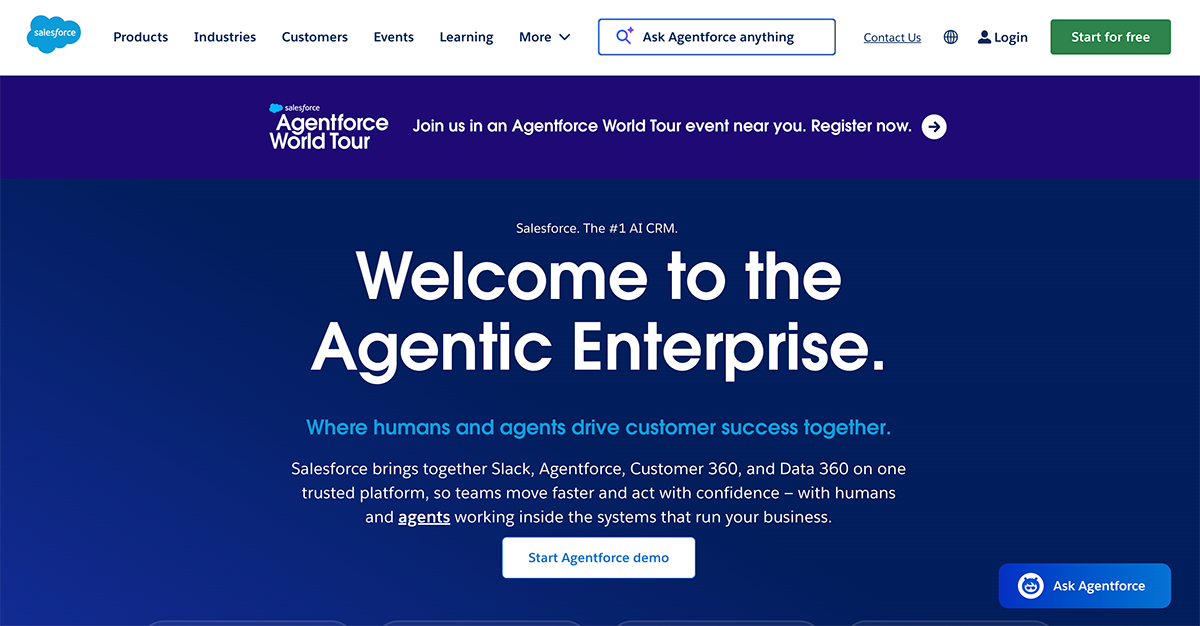
Salesforce is one of the most customizable CRM platforms on the market. It offers advanced tools for large organizations with complex processes.
- Custom objects and workflows
- Advanced automation
- AI-powered insights
- Large integration ecosystem
One of Salesforce’s biggest advantages is its scalability. Organizations can start with basic CRM functionality and gradually expand into advanced automation, customer service, analytics, and industry-specific solutions. However, the platform often requires more configuration, administration, and training than many small businesses initially expect.
Pricing
- Essentials: around $25 per user per month
- Professional: around $80 per user per month
- Enterprise: around $165 per user per month
- Unlimited: around $330 per user per month
Best for
Large companies that need deep customization and scalability.
3. HubSpot CRM
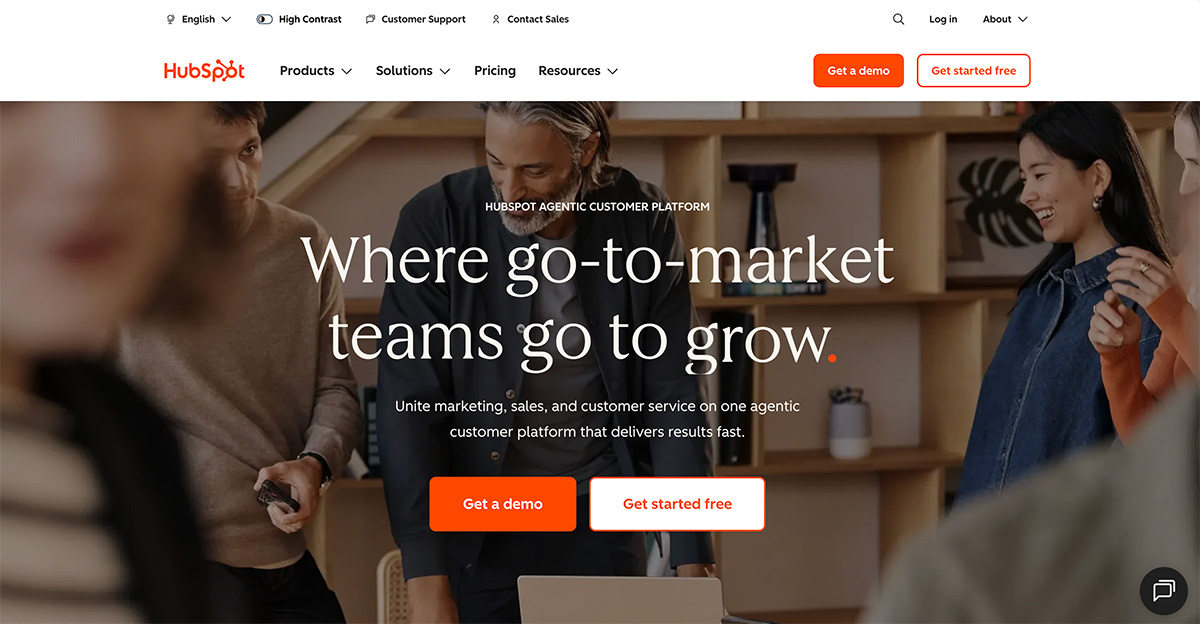
HubSpot combines CRM functionality with marketing and customer service tools.
- Custom pipelines
- Marketing automation
- Sales and support tools
- Easy-to-use interface
HubSpot’s main strength is its integrated ecosystem. Businesses can manage marketing, sales, customer service, content, and automation from a single platform. This reduces the need for multiple tools, although costs can increase as companies add users, contacts, and advanced functionality.
Pricing
- Free plan available
- Paid plans start around $20 to $50 per user per month
- Advanced plans can exceed $1,000 per month depending on features
Best for
Businesses looking for an all-in-one platform that connects marketing and sales.
4. Zoho CRM
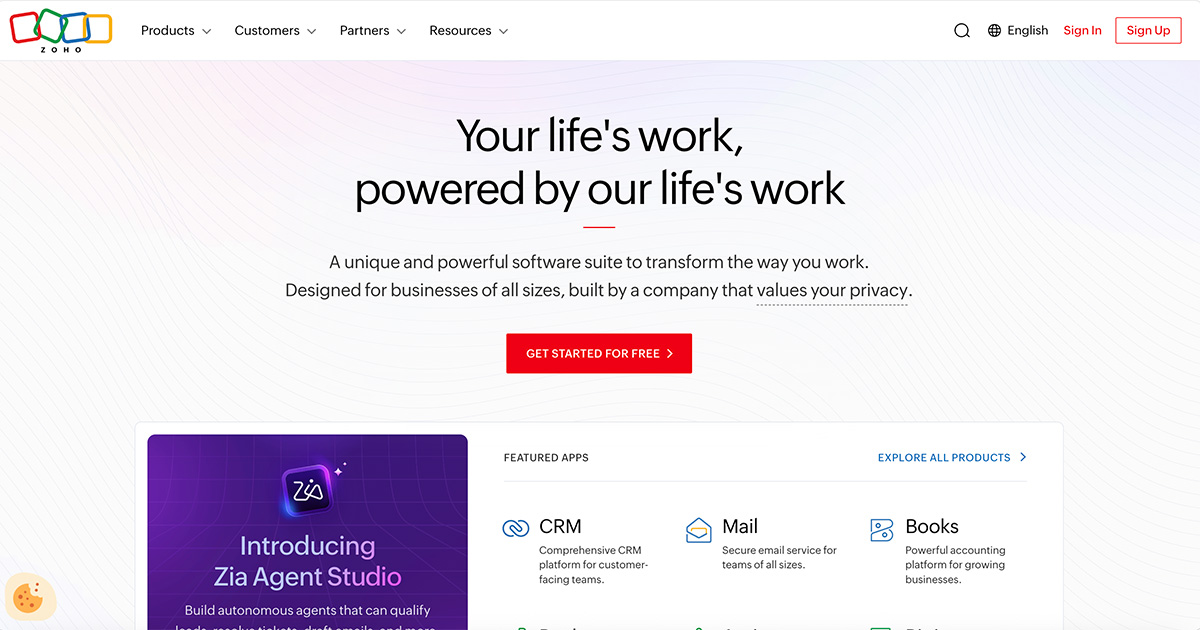
Zoho CRM is a flexible and affordable option with a wide range of customization features.
- Custom modules and fields
- Workflow automation
- AI assistant
- Multichannel communication
Zoho CRM is part of a larger suite of business applications that includes email, accounting, customer support, marketing, and project management tools. This can be attractive for businesses looking to centralize operations, although the extensive feature set may require additional setup and customization compared to simpler CRM platforms.
Pricing
- Standard: around $14 per user per month
- Professional: around $23 per user per month
- Enterprise: around $40 per user per month
- Ultimate: around $52 per user per month
Best for
Small to mid-sized businesses that want customization at a lower cost.
5. Freshsales
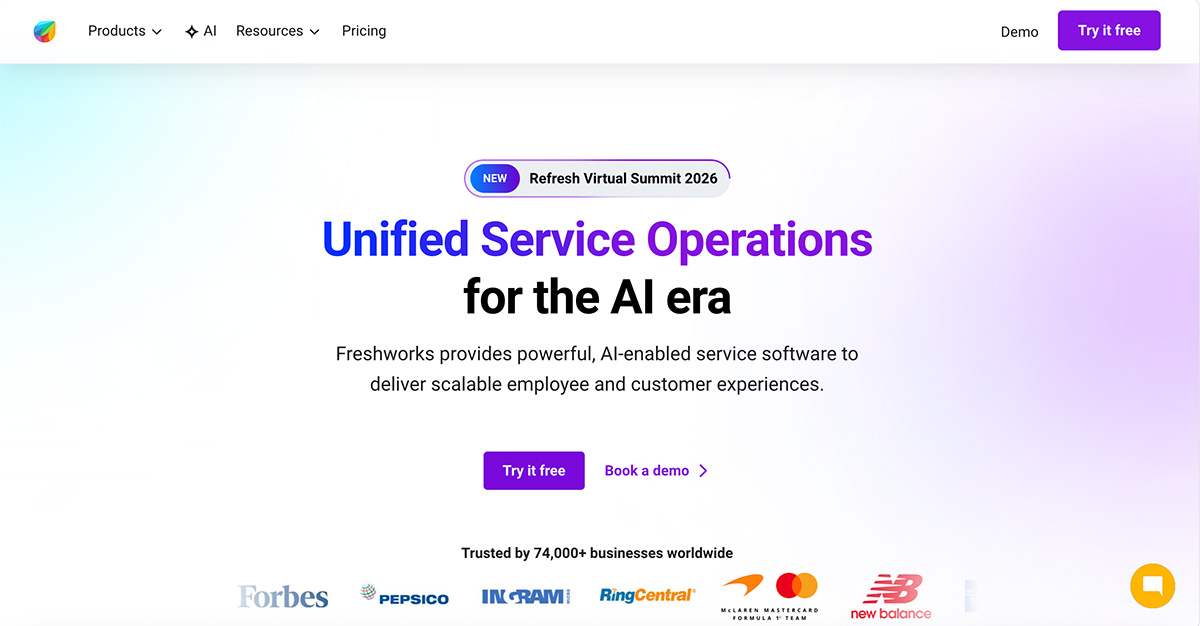
Freshsales combines CRM capabilities with built-in communication tools and automation.
- Built-in email and phone
- AI lead scoring
- Workflow automation
- Reporting tools
Freshsales stands out for combining CRM functionality with communication tools such as email and phone capabilities. This allows sales teams to manage customer interactions from a single environment while benefiting from automation and AI-powered insights designed to improve productivity.
Pricing
- Free plan available
- Paid plans start around $15 per user per month
- Enterprise plans around $69 per user per month
Best for
Teams that want communication and CRM in one system.
6. Pipedrive
Pipedrive is a sales-focused CRM designed to help small and medium-sized businesses manage opportunities through a visual pipeline.

- Visual sales pipelines
- Deal and activity management
- Workflow automation
- Custom reports and dashboards
- Email synchronization and tracking
- Lead generation tools
- Large integration marketplace
The platform focuses heavily on helping salespeople maintain momentum throughout the sales cycle. Its visual approach makes it easy to identify stalled opportunities and prioritize follow-ups. While Pipedrive excels at pipeline management, businesses seeking extensive marketing or customer service functionality may require additional tools.
Pricing
Plans typically start at around $24 per user per month depending on billing options and plan selection.
Best for
Small sales teams that want a dedicated sales CRM with excellent usability and pipeline visibility.
7. Monday
Monday CRM combines customer relationship management with workflow management and team collaboration

- No-code automation
- Sales forecasting
- Lead management
- Custom dashboards
- Team collaboration tools
Because Monday CRM is built on the broader Monday Work OS platform, teams can extend CRM processes beyond sales and connect them with operational workflows. This flexibility is appealing for growing organizations, although it may require more planning and configuration than traditional sales-focused CRMs.
Pricing
Plans generally start around $12 per user per month, with additional functionality available in higher tiers.
Best For
Businesses that want a customizable CRM connected to broader operational workflows.
8. Insightly
Insightly is a CRM platform that combines customer relationship management with project management capabilities

- CRM and project management
- Lead and opportunity management
- Workflow automation
- Relationship linking
- Custom dashboards
- API and AppConnect integrations
- AI-assisted productivity features
Unlike many CRM platforms that focus exclusively on pre-sale activities, Insightly helps businesses maintain visibility after deals close. This makes it particularly useful for organizations that manage projects, implementations, or ongoing client relationships following the sale.
Pricing
Plans generally start around $29 per user per month and scale based on automation and customization requirements.
Best for
Project-based businesses, agencies, consultants, and organizations that need visibility after the sale is completed.
9. Copper
Copper is a CRM designed specifically for companies that rely heavily on Google Workspace.

- Native Google Workspace integration
- Contact and company management
- Sales pipeline tracking
- Workflow automation
- Email tracking
- Activity management
- Reporting and forecasting
Copper’s tight integration with Google Workspace reduces the need for users to switch between applications. Emails, meetings, contacts, and opportunities remain closely connected, helping teams maintain context and improve adoption without significantly changing existing workflows.
Pricing
Plans typically start around $23 per user per month, with higher tiers adding automation and reporting capabilities.
Best for
Businesses that operate primarily within Gmail and Google Workspace.
10. Nimble
Nimble focuses on relationship management rather than traditional pipeline-heavy CRM processes

- Contact enrichment
- Relationship management
- Email integration
- Social profile aggregation
- Activity tracking
- Sales pipelines
- Microsoft and Google integrations
Rather than focusing primarily on complex sales processes, Nimble emphasizes relationship building and contact intelligence. This makes it particularly useful for professionals who depend on networking, referrals, partnerships, and long-term customer relationships.
Pricing
Pricing is typically around $24.90 per user per month.
Best for
Consultants, small teams, founders, and professionals who depend heavily on relationship building.
11. Nutshell
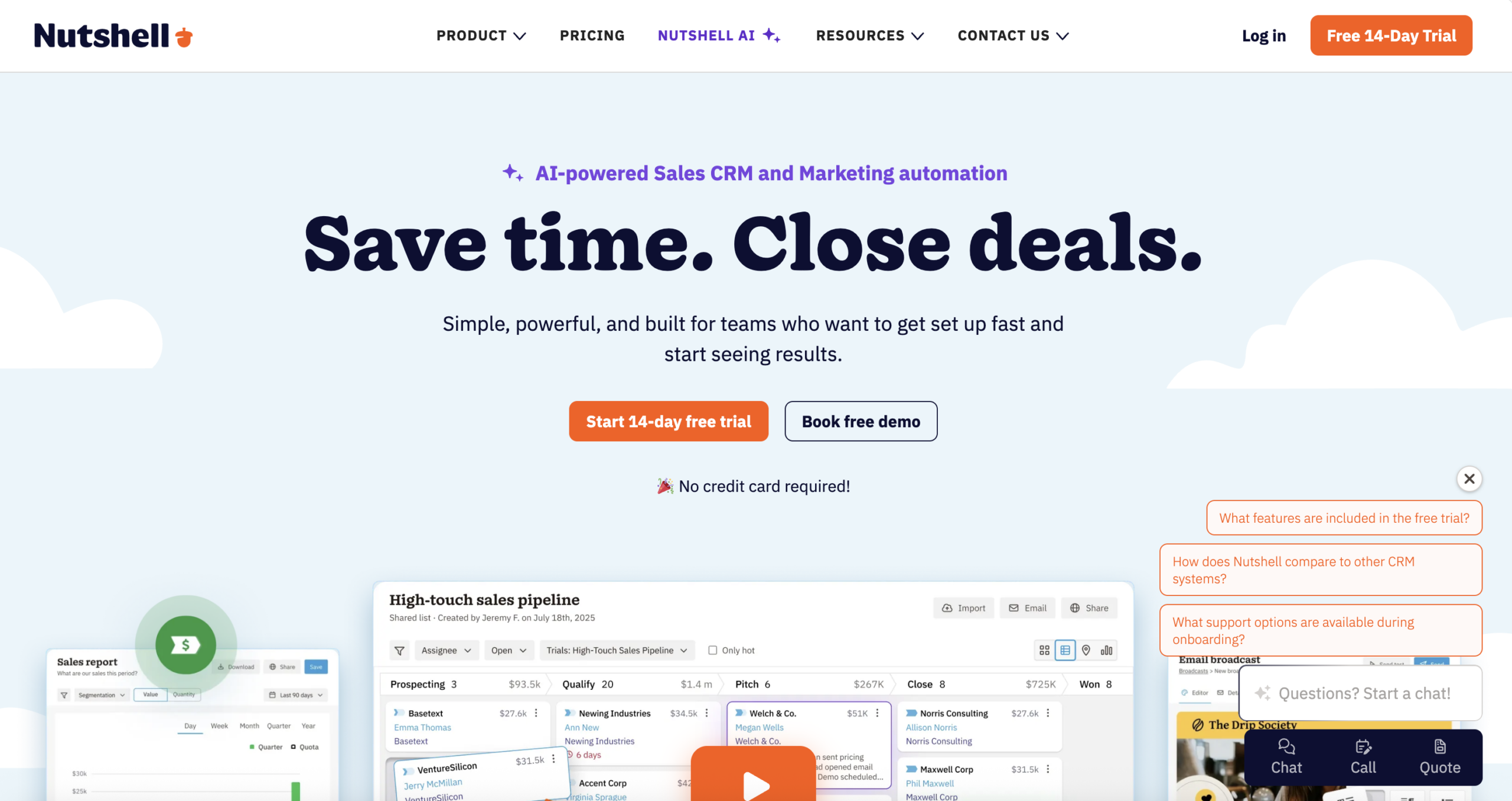
Nutshell is a CRM platform designed specifically for small B2B sales teams
- Contact management
- Pipeline management
- Email marketing
- Reporting and forecasting
- Lead assignment
- Activity tracking
- Sales performance reporting
Nutshell aims to provide a balance between usability and functionality. Its combination of CRM, reporting, and email marketing capabilities makes it attractive for small businesses that want to manage customer relationships and outreach activities without maintaining multiple systems.
Pricing
Plans generally start around $13 per user per month.
Best for
Small B2B sales teams that need CRM and email marketing in a single platform.
12. Less Annoying CRM
Less Annoying CRM is designed specifically for small businesses that want a simple and affordable CRM solution

- Contact management
- Pipeline tracking
- Task management
- Calendar integration
- Email logging
- User permissions
- Mobile access
The platform intentionally avoids feature overload and focuses on core CRM requirements. This simplicity can help small businesses get started quickly, although organizations with advanced automation, customization, or reporting needs may eventually outgrow the platform.
Pricing
A single pricing plan is available at approximately $15 per user per month.
Best For
Very small businesses, solo operators, and teams that want a straightforward CRM without complexity.
Takeaway
Among the available options, Onpipeline offers a strong balance between usability and functionality. It combines pipeline management, quoting, and revenue tools in a single platform, making it a practical choice for teams that want control without complexity.