
CRM for B2B Sales
*****
Manage leads, opportunities, quotes and long sales cycles.
Capture B2B Leads
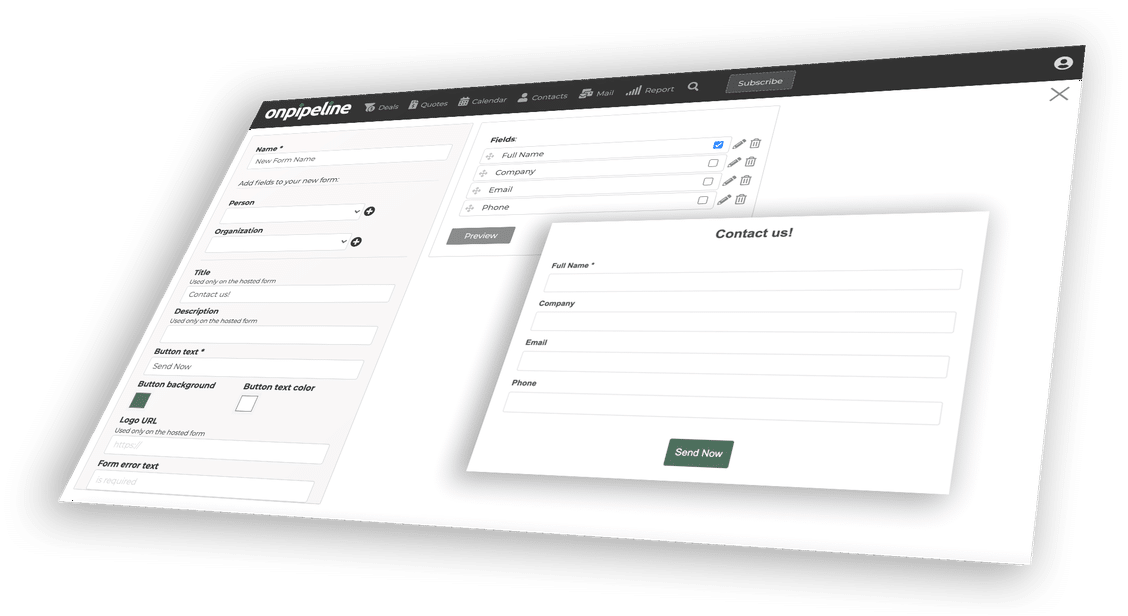
B2B companies rely on a constant flow of leads, inquiries and opportunities. Capture leads manually or automatically from website forms, campaigns, APIs and external systems. Distribute leads, assign owners and keep every opportunity connected from the first interaction.
Lead Sources
Website forms
Campaigns
Partner referrals
API integrations
Manage Sales Opportunities
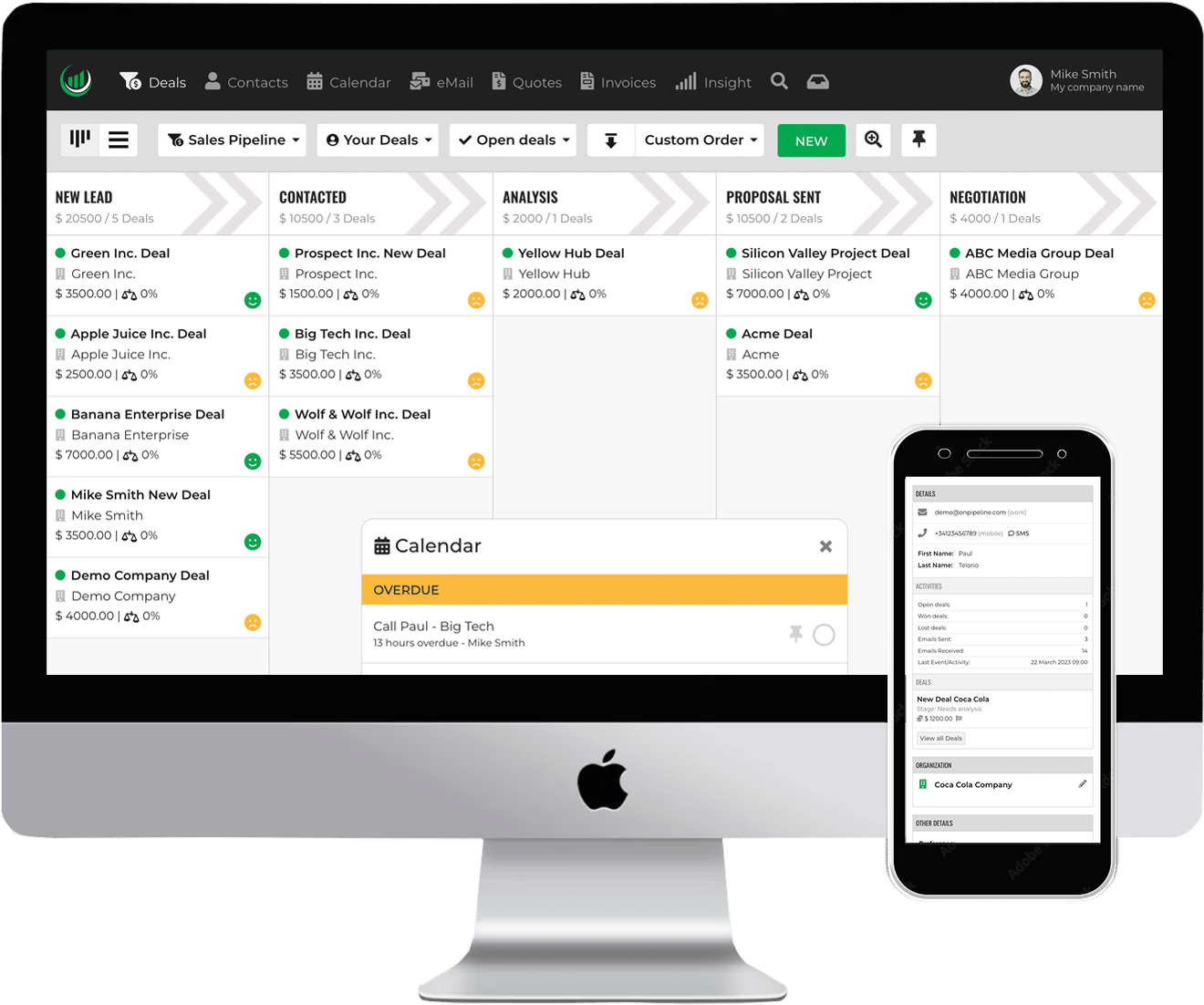
B2B sales cycles often involve multiple meetings, follow-ups and decision makers. Use a customizable pipeline to track every opportunity from first contact to closed deals. Keep meetings, proposals and customer interactions connected throughout the sales process.
Workflow:
→ Lead
→ Discovery
→ Qualification
→ Proposal Sent
→ Negotiation
→ Customer
Meetings & Activities
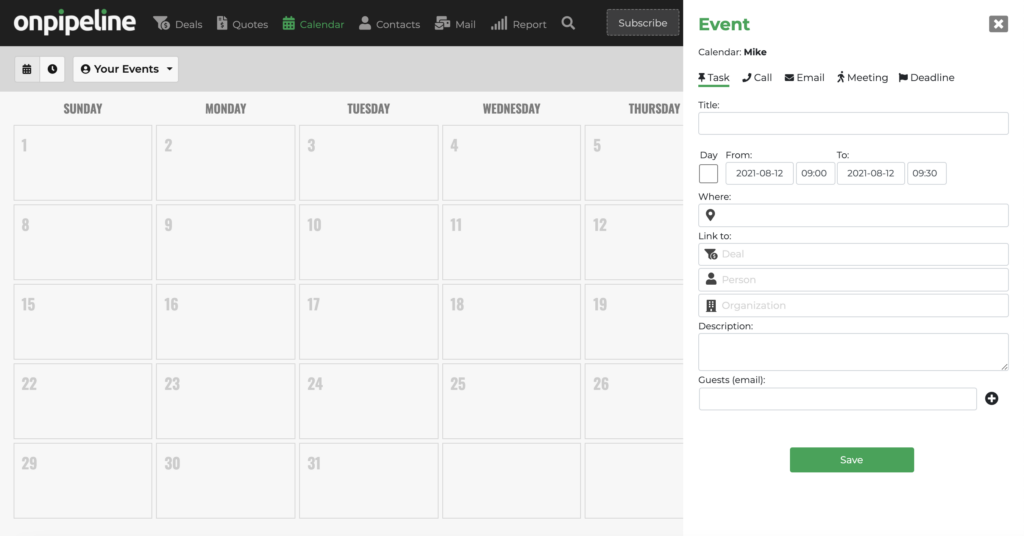
Long sales cycles rely on meetings, follow-ups and ongoing customer interactions. Keep customer meetings, calls, activities and next actions organized while maintaining visibility across every opportunity.
Track discovery meetings, follow-ups, emails and deadlines from one place while ensuring every opportunity moves forward.
Keep meetings, customer interactions and sales activities connected throughout the sales process.
Quote Management
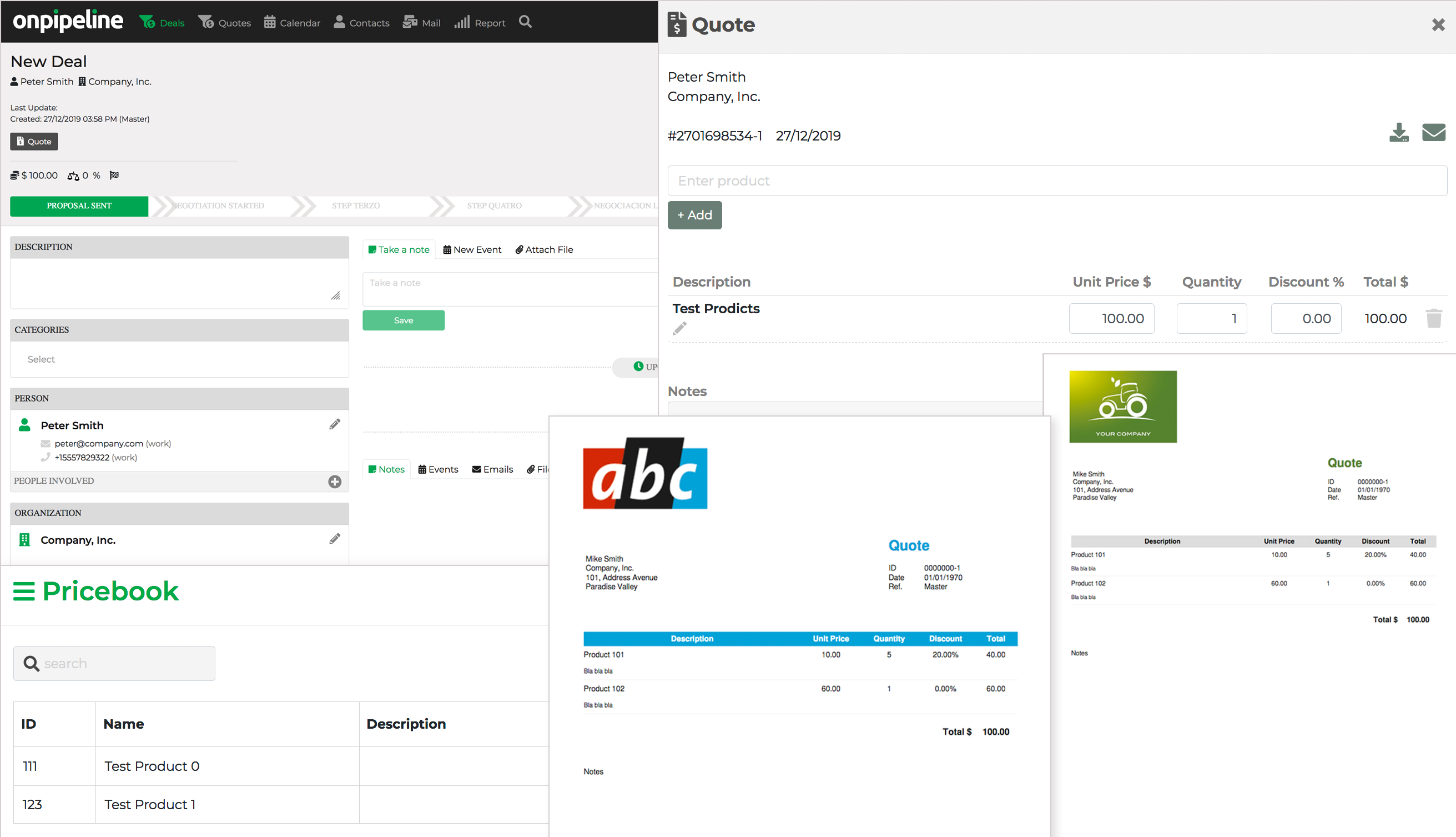
Quotes, proposals and approvals are an important part of many sales processes. Create and manage quotes directly from opportunities while keeping customer information and sales activities connected.
Track quote history, revisions and approvals from one place while maintaining visibility throughout the sales cycle.
Onpipeline also supports e-signatures, helping teams speed up approvals and close deals faster by keeping proposals and signatures connected to opportunities.
Forecast
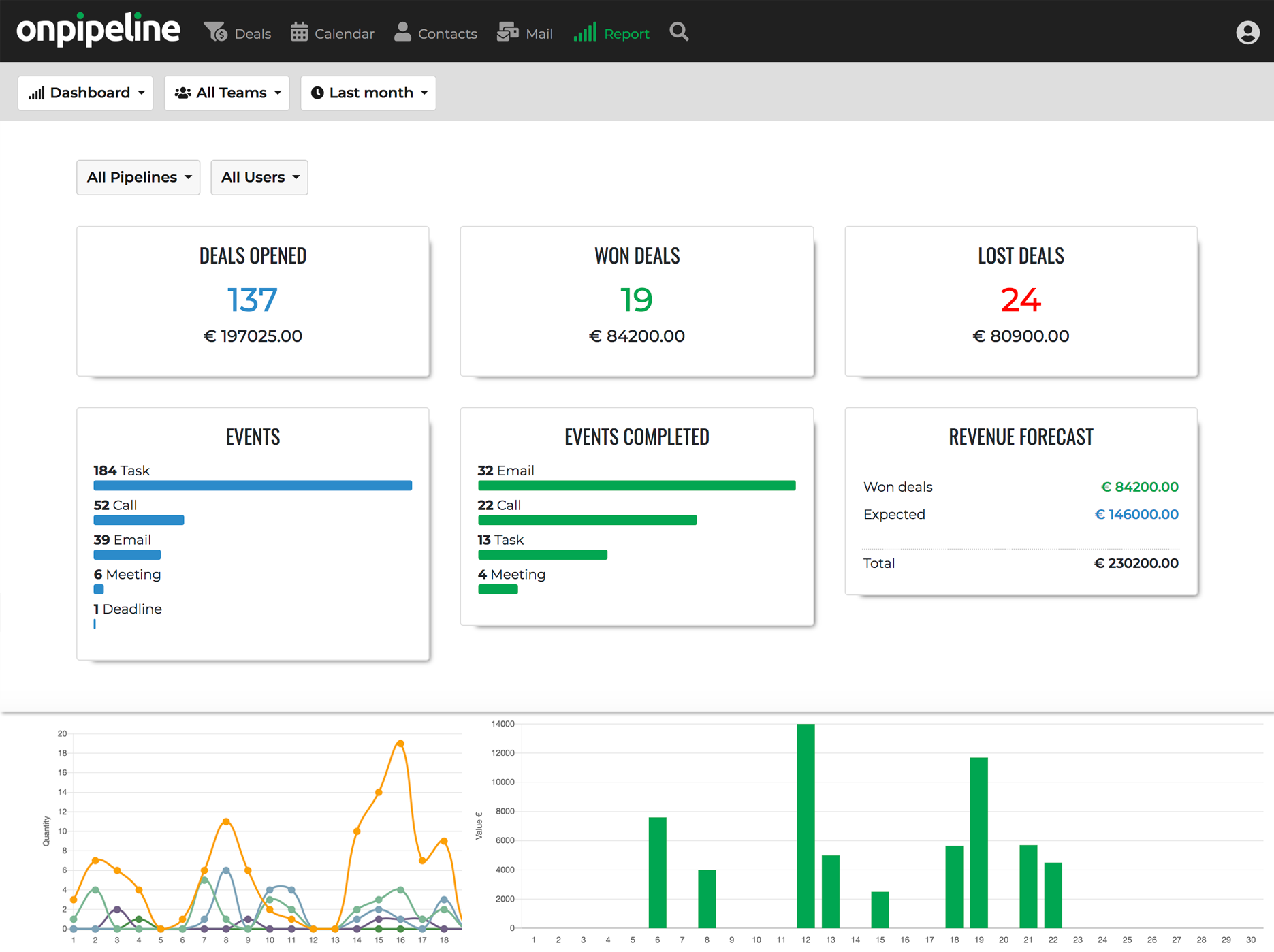
Forecast future revenue by tracking opportunities, expected income and long sales cycles throughout your pipeline.
Monitor active opportunities, sales performance and future revenue streams while improving planning and decision making.
Gain visibility into pipeline value, expected revenue and business growth.
External data sync
Many companies rely on multiple systems for operations, customer data and internal workflows. Connect Onpipeline with external applications, databases and internal systems.
Custom fields and APIs allow teams to synchronize customer information and adapt the CRM to their business process.
Through our API (included in all plans), CRM data can be synchronized with external applications in real time.
Understanding the Unique Needs of B2B Sales
In B2B sales, patience is indeed a virtue, and it’s imperative not to miss critical steps along the way. The cycle for B2B transactions tends to be longer due to the complexity of the products or services involved, as well as the need to align with the purchasing organization’s objectives and procedures. Sales teams must be prepared for a more extended period of nurturing and relationship-building before closing deals.
Sales Pipeline and Activity Management
A structured pipeline helps organizations visualize and manage every stage of the process. It provides clarity on where each prospective deal stands, helping sales teams prioritize their efforts. By tracking deals through various pipeline stages, you can ensure that no important steps are overlooked.
Customization and Personalization
B2B customers expect a high degree of customization and personalization. They often require tailored solutions that align with their specific business needs. Sales representatives must possess a deep understanding of the customer’s industry, challenges, and goals to provide the level of customization required to succeed in B2B.
Multi-Decision Maker Environments
In B2B sales, decisions are rarely made by a single individual. Instead, there are usually multiple stakeholders involved in the decision-making process. Onpipeline’s deal management system, can store information about all stakeholders on one page, ensuring that you have a comprehensive view of the decision-making landscape.
Relationship Building
Relationships are the lifeblood of B2B sales. Establishing and nurturing long-term relationships with clients is paramount. Unlike B2C, where one-off transactions are common, B2B often involve ongoing partnerships. Building trust and delivering consistent value are key to retaining B2B clients.
Frequently Asked Questions about B2B CRM
What is B2B CRM?
B2B CRM is a special type of CRM system made for businesses that sell to other businesses.
B2B CRMs are different from B2C CRMs. B2B CRMs handle complex sales processes and relationships with many stakeholders. They also manage longer sales cycles within client organizations.
The features help with managing leads and opportunities, visualizing the sales pipeline, and managing accounts and contacts. It also provides detailed reporting and analytics.
These systems help businesses sell more , build better customer relationships, and use data to make decisions.
How does B2B CRM benefit businesses?
B2B CRM systems have many advantages. These benefits include better customer relationships, smoother sales processes, and improved business efficiency. Here are some key advantages:
- B2B CRM systems help businesses by showing client history, preferences, and interactions. This enables more personalized and effective communication, fostering stronger and more lasting relationships.
- A B2B CRM organizes and manages the sales pipeline, making the sales process more efficient. Sales teams can focus on strategy and customer engagement by tracking leads, managing opportunities, and automating repetitive tasks.
- B2B sales involve many people within and outside the organization working together. CRM systems help people work together by providing a platform to share information and stay updated.
- CRMs have analytics tools that show insights on customers, sales trends, and the market. These insights can guide strategic decisions, from product development to marketing strategies.
- B2B CRM tools boost marketing efficiency by using precise customer data for focused campaigns. This results in better marketing, more customers, and higher returns on marketing investments.
- Businesses can provide better customer service by promptly accessing customer information and history. This helps them respond to inquiries and resolve issues more efficiently. This improves the overall customer service experience.
- B2B CRM systems help develop long-term sales strategies by analyzing sales data over time. This helps businesses in identifying successful practices and areas for improvement.
- A B2B CRM can grow as the business grows, handling more data and complex sales without losing speed or efficiency.
In summary, a B2B CRM system is important for businesses. It helps improve customer relationships, streamline sales processes, and make data-driven decisions. This leads to growth and success in the competitive B2B marketplace.
Can B2B CRM integrate with other systems?
B2B CRM systems are made to work with other business systems. Onpipeline has features that help with these integrations. Onpipeline offers APIs and Widgets that connect the CRM with other business tools and systems. Here’s how Onpipeline supports these integrations:
- Onpipeline’s APIs allow the CRM to connect with many other apps and databases. Data can sync instantly, so all platforms have the same and current information.
- Onpipeline offers widgets that add specific functionalities to the CRM. These widgets enhance its capabilities and make it work well with other systems used by the business.
- Onpipeline allows businesses to manage all their data in one place, including customer information and sales data. This centralized platform streamlines business operations.
B2B CRM systems need integration capability to help different departments work together smoothly. Integration ensures access to up-to-date information, streamlining processes and improving business performance.
What key features should a B2B CRM have?
To manage customer relationships and streamline sales processes, it is crucial to select a B2B CRM with key features. Here are the essential features to look for:
- The CRM should be able to track and manage leads and sales opportunities effectively. You can use tools to score leads, track progress in sales, and manage follow-ups.
- A good B2B CRM should help manage contacts and accounts well. It should store all client information, such as communication history, key contacts, and account details.
- Visualizing the sales pipeline helps sales teams understand the different stages of deals. This allows them to prioritize and strategize more effectively.
- The CRM should be able to change to fit your business’s sales processes, workflows, and reports.
- When choosing a CRM, make sure it can work well with other business systems like ERP, email and marketing tools.
- To track performance and understand customer trends, you need advanced analytics and reporting features. These features help you make data-driven decisions.
- Collaboration tools are important for a cohesive sales strategy. They have features like shared calendars and task assignments. They also allow for document sharing among team members.
- To access information and do tasks while on the move, it’s important to have a mobile-friendly CRM or a dedicated mobile app.
- Managing email campaigns and tracking their effectiveness is crucial for B2B marketing.
- Make sure the CRM is secure and follows data protection rules.
- A simple and easy-to-use interface is important so that users can adopt and effectively use the CRM.
How does B2B CRM manage and nurture leads?
B2B CRM systems manage and nurture leads by providing a structured and efficient approach to lead handling. Key functionalities include:
- CRMs capture leads from different sources and organize them in an easy-to-manage format. This can involve automated data entry from web forms, emails, or other channels.
We qualify leads using specific criteria and then assign them to the right salespeople. This ensures that leads are followed up by the most suitable team member. - CRMs send automated and personalized messages to keep leads engaged and moving through sales.
- CRMs keep track of how leads interact and analyze lead behavior. This helps improve sales strategies and understand effective methods.
- Integrating with marketing tools helps combine lead nurturing and sales and marketing efforts.
Onpipeline’s CRM is designed to handle leads with care, automate deal creation, assign sales reps based on conditions, and capture leads through web forms and APIs. In a B2B context, these abilities make managing and growing leads easier and more efficient.
How much a B2B CRM will it cost?
The price of a B2B CRM can differ a lot based on various factors. These factors include the specific features you need, the number of users, how much customization you want, and the vendor you select.
- Prices can range from low-cost options for basic functionalities to several hundred dollars per user per month for more advanced, enterprise-level systems.
- Many CRM providers offer tiered pricing plans to accommodate businesses of different sizes and needs. It’s common to see a per-user-per-month pricing model. Some vendors may have additional charges for extra features, integrations, customization, or support services.
Onpipeline offers a competitive and flexible pricing structure for its B2B CRM services. The pricing offers plans for businesses of all sizes, including small businesses and larger enterprises. The costs are based on the number of users and the length of time, so they can be adjusted to fit the needs of a business.
Free for 30 days!
No contract and no credit card required. Fully operational account. You can try and confirm the same settings by placing an order, or simply let the trial period expire.
Start today