
 Quiz gratuito para descobrir a sua aptidão para vendas
 Calculadora de Pipeline de Vendas
Urgency is a cornerstone of sales psychology and salespeople consistently use it in their selling techniques — but it becomes truly scalable when managed inside a structured CRM de vendas.
The sense of urgency can be created with sales promotions, but a sales rep can also use these techniques without specific promotions. Let’s explore 10 effective strategies for adding urgency and close more deals.
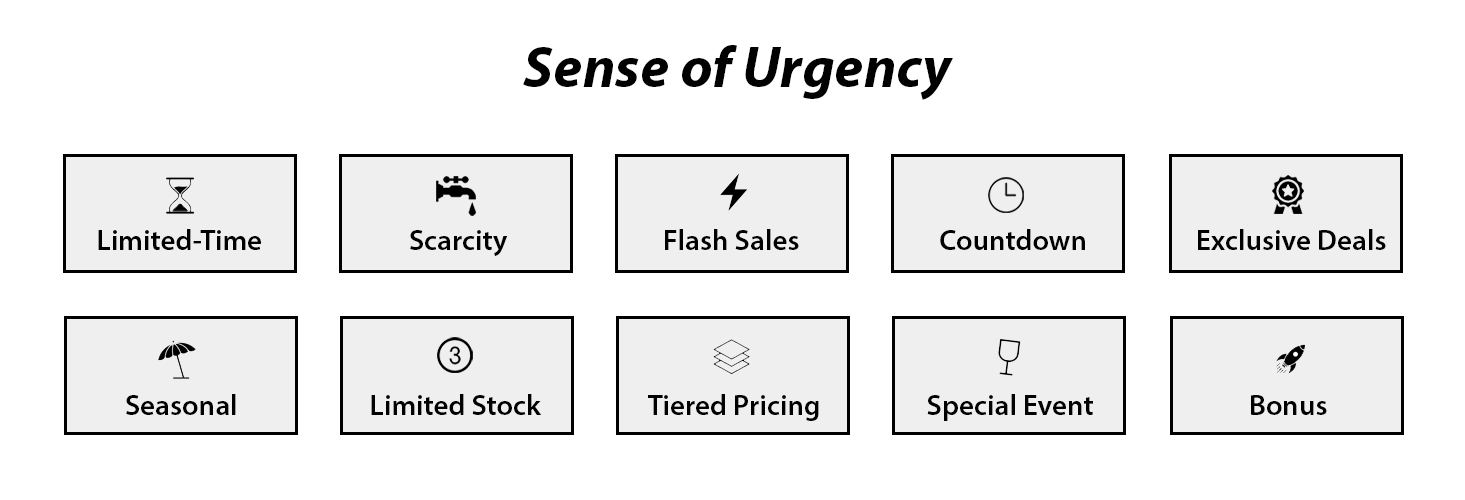
Limited-Time Offers
Encourage swift decision-making by presenting time-sensitive discounts.
Exemplo: a software company might offer a 30% discount on its premium plan, valid for the next 72 hours. Setting a deadline on an offer activates urgency. It compels customers to move from thought to action.
Why Limited-Time Offers Work:
The restricted timeframe creates a perception of exclusivity and heightened value. Customers feel they are gaining a special advantage by availing the offer within the stipulated time.
Scarcity
Scarcity is the perception that a product, service, or opportunity is difficult to obtain. It can result from limited production, selective distribution, restricted access, or high demand, and may be part of the product’s overall marketing positioning.
Exemplo: A luxury watch brand produces only a small number of pieces each year and distributes them through selected retailers. Customers know that the watches are difficult to find, which increases their desirability and encourages buyers to act when one becomes available.
The psychology of scarcity taps into the human tendency to assign greater value to products and opportunities that are perceived as rare, exclusive, or not easily accessible.
Why Scarcity Works:
Scarcity strengthens a product’s positioning by communicating exclusivity and distinctiveness. When customers believe that something is genuinely difficult to obtain, they may perceive it as more valuable and desirable.
Flash Sales
Create excitement and urgency with flash sales. Consumers are driven to act fast to get the special offer before it disappears. This creates excitement and anticipation.
Exemplo: An online fashion retailer launches a 24-hour flash sale, offering a 50% discount on select items. The urgency prompts customers to shop quickly and capitalize on the significant savings.
Why Flash Sales Work:
Flash sales leverage the psychology of impulse buying. The time-sensitive nature of the promotion prompts customers to make spontaneous decisions, often driven by the excitement of the offer.
Seasonal Promotions
Seasonal promotions are marketing campaigns and sales strategies designed to align with specific seasons, holidays, or events throughout the year.
These promotions capitalize on the unique characteristics and consumer behaviors associated with different seasons.
Research on seasonal-goods markets shows that customer demand, product availability, and pricing decisions change throughout a finite selling season. Read the study in Marketing Science.
Exemplo: A retailer hosts a summer clearance sale, offering significant discounts on swimwear, shorts, and summer accessories to clear out seasonal inventory.
Why Seasonal Promotions Work:
Seasonal promotions align with the changing needs and interests of consumers during specific times of the year. By offering relevant products and discounts, businesses can tap into the natural demand associated with each season.
Limited Inventory Alerts
Limited Inventory Alerts inform customers about dwindling stock levels of a particular product. This strategy leverages the principle of scarcity, emphasizing that the item in question is in high demand and may soon be unavailable.
Exemplo: An electronics retailer displays the message “Only 4 laptops left in stock” next to a popular model, encouraging interested customers to purchase before the remaining units are sold.
Why Limited Inventory Alerts Work:
Limited inventory suggests exclusivity and a higher perceived value for the product. Customers feel they are gaining access to something special and unique, driving their desire to purchase.
Countdown Timers
Countdown timers are often used alongside flash sales and other limited-time or limited-stock promotions.
By showing how much time remains before an offer expires, a countdown timer increases the perceived urgency and value of the promotion. As the available time decreases, customers may feel greater pressure to make a decision before they miss the opportunity.
Exemplo: A retailer displays a countdown timer on the homepage to promote a limited-time discount:
Ends in 12 hours - Buy now!
Benefits of using a Countdown Timer
A countdown timer is more than an automated, low-maintenance tool. Its main purpose is to create a sense of urgency, capture customers’ attention and encourage immediate action.
A timer displaying a message such as “Offer ends in X hours” can increase sales conversion rates. In one e-commerce A/B test, adding a time-sensitive delivery message resulted in a 27.1% increase in revenue. However, results may vary depending on the offer, audience, and context. Speero case study
Exclusive Deals
Exclusive deals refer to special offers, discounts, or promotions that are available to a specific group of customers, providing them with unique advantages not accessible to the general public.
Research on loyalty programmes identifies utilitarian, emotional, and relationship benefits that can shape how members perceive exclusive rewards and privileges – Read the study
Exemplo: An store offers an exclusive 20% discount for members of its loyalty program, accessible only to those who have signed up for the program.
Why Exclusive Deals Work:
Exclusive deals make customers feel special and valued. Knowing that they have access to offers that not everyone can enjoy creates a sense of exclusivity and fosters a stronger connection with the brand. The exclusivity and limited availability of these deals trigger the fear of missing out (FOMO).
Tiered or Early-Bird Pricing
Tiered pricing is a strategic model in which products or services are offered at different price points, usually with different features, benefits, or service levels.
Tiered offers can differentiate products through features, services, and levels of value, as described in Harvard Business Review’s Good-Better-Best pricing framework.
However, tiered pricing creates urgency only when access to a particular price or set of benefits is limited by time, availability, or purchase stage.
Early-bird offers apply this principle by rewarding customers who commit before a specific deadline. The incentive may be a lower price or access to additional features and services at no extra cost.
Example 1: A software company includes advanced reporting, priority onboarding, and an additional user licence at no extra cost for customers who subscribe before 30 September. After that date, these features are available only as paid add-ons, giving potential buyers a clear reason to act sooner.
Example 2: A software company offers an early-bird subscription price of $79 per month to customers who sign up before 30 September. After that date, the price increases to $99 per month, giving interested buyers a clear financial reason to act sooner.
Why Tiered Pricing Works:
Customers can immediately understand the additional value they receive by making an earlier decision, whether through a lower price, extra features, or enhanced service. When the deadline and conditions are genuine, this approach encourages action without reducing the value of the core product.
Special Event or Launch
Businesses use special events and product launches strategically. They do this to create buzz, excitement, and attention for a new product, service, or event.
Exemplo: An online gaming company announces a special launch event for a highly anticipated video game. To build anticipation, they open limited-time pre-orders with exclusive in-game items for those who pre-purchase.
Why Special Event and Launch Strategies Work:
The sense of urgency and exclusivity associated with special events can drive immediate sales. Limited-time promotions, exclusive offers, or early access incentives encourage attendees to make on-the-spot purchases.
Bonus Incentives
By offering timely bonuses, businesses can motivate customers to act fast. This drives immediate actions like making purchases, signing up for services, or joining promotions.
A field experiment found that bonus packs generated a greater sales volume than an economically equivalent price discount in the retail setting examined. Read the study in the Journal of Marketing.
Exemplo: A loyalty program introduces a flash points promotion. Customers earn double or triple loyalty points for all purchases made within a 48-hour window, encouraging rapid engagement.
Why Bonus Incentives Work:
Urgent bonus incentives are effective in stimulating impulse buying behavior. The limited-time nature of the offer encourages customers to make unplanned purchases, especially when they perceive significant added value.
Our Takeaway
Creating urgency in sales is a delicate balance. You must motivate action while maintaining trust.
By using these strategies genuinely, businesses can leverage urgency well. Urgency will boost sales and improve customer engagement!
Experiment with these approaches and tailor them to suit your industry and target audience, ultimately driving a sense of urgency that aligns with your overall sales strategy.